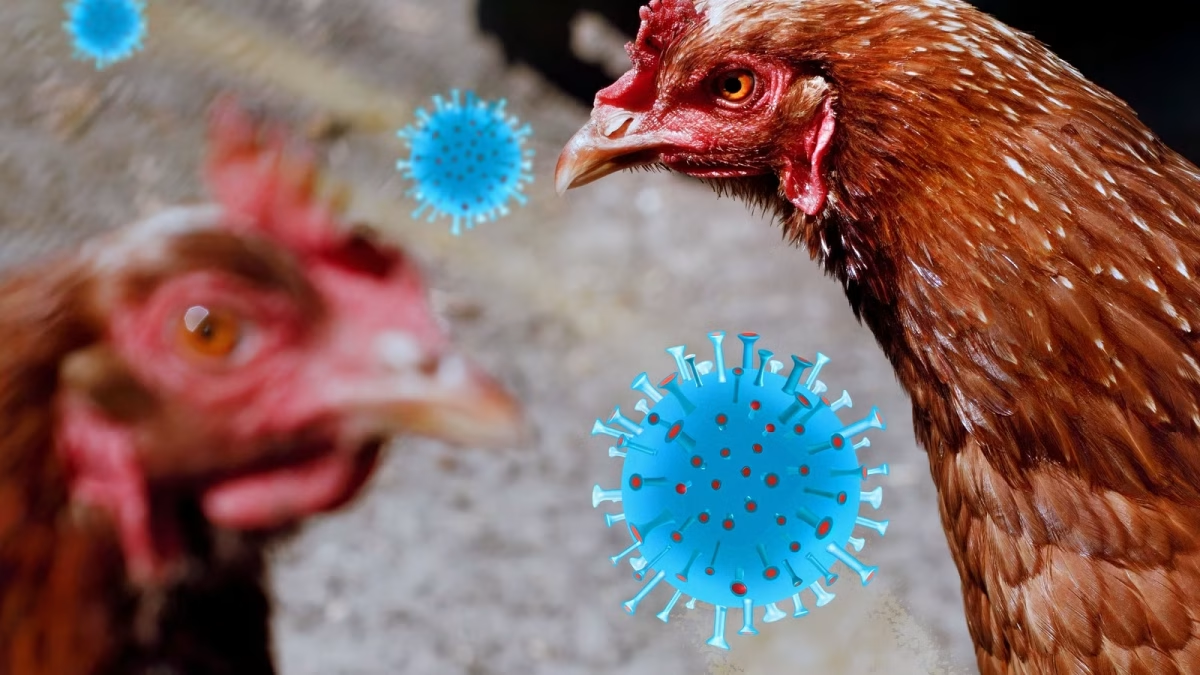
At the start of 2025, an alarming number of dead birds have been seen all around Long Island, mostly around beaches in Patchogue and Huntington. All of the dead birds have been tested positive for bird flu. And recently, five cases of birds have been tested positive with bird flu, with the news of the cases, people have been wondering: what is bird flu? What are the symptoms? What can we do to prevent bird flu from spreading?
Bird flu, or otherwise known as avian influenza or HPAI, is a highly contagious disease caused by a type of influenza A virus. There are different types of bird flu, with humans mostly receiving influenza A(H5), the others are A(H5N1), and A(H7N9). The disease mostly affects wildlife animals such as cows, and birds, as well as chickens and turkeys, known as domestic poultry animals that we occasionally eat. Bird flu can easily spread onto humans, and give them severe symptoms of illness, such as pink eye, fever, fatigue, cough, muscle aches, sore throat, nausea and vomiting, stuffy or runny nose, diarrhea, and shortness of breath. These symptoms can range from mild to severe, with pink eye and respiratory problems being the most common symptoms. The bird flu can range from mild to life threatening, most cases of humans getting bird flu have been mild, with 71 cases of humans in California with mild bird flu. But there are a few rare cases that involve death, such as a report of two patients dying in 2024, and one patient dying from bird flu in March 2025. There is no cure for the bird flu yet, instead, bird flu is treatable with antiviral drugs if administered early on, such as tamiflu, zanamivir, and rapivab.
As of late January 2026, five cases of bird flu in birds have been reported, the cases coming mostly around Suffolk county. The reason why these cases are worrying is because the more birds are tested positive with bird flu, the more likely that humans around Long Island are to be contaminated with bird flu. The cases of humans getting bird flu have mostly been reported in California. Luckily, as of right now, bird to human transmission is rare, but the public is still urged to stay away from dead birds and animals. And people who work with poultry, cows, ducks, or geese, are more likely to be contaminated with bird flu.
To avoid being contaminated with bird flu, avoid touching dead birds, washing your hands with soap, cooking eggs or poultry to 165 degrees, getting your seasonal flu shots, and consuming only pasteurized (heated to a specific temperature) milk and dairy items. And to make people feel much safer, the CDC says that they’re using their flu surveillance system to monitor for bird flu infections in people.