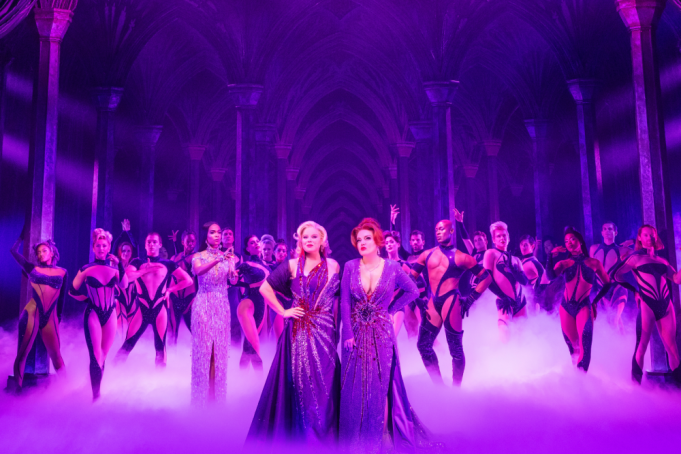
An insane feat of costume design, stage combat, and vocal skill, Death Becomes Her is Broadway’s love letter to the campy horror movies of the late 20th century. A musical comedy that is equal parts nihilistic and optimistic, this show was what people think of when they think Broadway: glitter, quick-changes, and cartoonish violence with powerhouse voices. However, the story at the heart of all the moving pieces was just as captivating as the special effects.
Death Becomes Her focuses on how youth and beauty correlate to relevancy in Hollywood, but also how endlessly chasing these things may curse and entrap a person. The two leads, played by Megan Hilty and Jennifer Simard, are two women who give in to the promise of eternal and unconditional adoration but fall victim to its side effects. Hilty and Simard play Madeline Ashton and Helen Sharp respectively, and their friendship is violently competitive, violently entertaining, and violently violent. Simard gives Helen an unhinged edge that gets sharper throughout the show. Her dry humor and grounded villainy compliments Hilty’s bubbly, highstrung violence perfectly. These are two characters that come dangerously close to being unbelievable as friends, but the actresses managed to highlight their similarities without compromising their individuality.
Beyond the two female leads, the character Viola Van Horn also stole the show, played by Michelle Williams’ amazing understudy, Ximone Rose. Her songs are the ones that really capture the audience’s attention, and it’s easy to see how the characters become charmed by her once you hear her sing.
There’s a male character in the show, played by Christopher Stieber. Although he was incredible and hilarious, his songs did take a backseat to the much more entertaining scenes between the two female leads, which is unfortunate because of how well Stieber played the character.
Although the sets were great, flashier and more convincing sets exist on Broadway, and I was disappointed by the contrast between how showy the costumes and actors were compared to the sets.
The costuming, however, was a high point. There was a need for a suspension of disbelief, specifically during a scene where one character is meant to have a huge, smoking injury. But the costumes were truly impressive and that made the show endlessly entertaining.
In all, this show is an accomplishment of choreography and special effects and an homage to the showmanship of Broadway past. I would recommend it to anyone who loves fun and flashy musicals, watching talented performers show off, or a good fight scene.